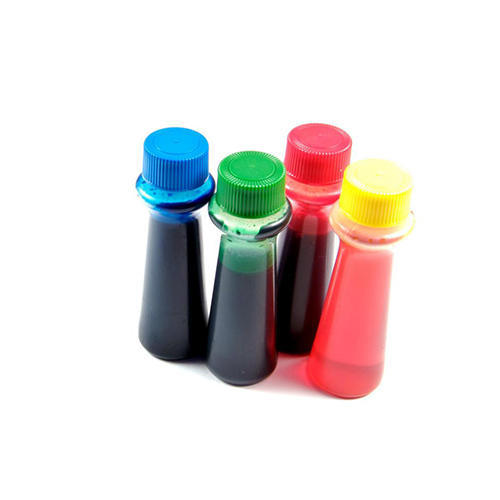
The colour of food is an integral part of our culture and enjoyment of life. Even early civilizations such as the Romans recognized that people "eat with their eyes" as well as their palates. Saffron and other spices were often used to provide a rich yellow colour to various foods. Butter has been coloured yellow as far back as the 1300's.
We provide Food Dye. Today, all food colour additives are carefully regulated by authorities to ensure that foods are safe to eat and accurately labeled.

Home » Food Colour
Food Colour
Why Are Colour Additives Used In Foods?
Colour is an important property of foods that adds to our enjoyment of eating. Nature teaches is early to expect certain colours in certain foods, and our future acceptance of foods is highly dependent on meeting these expectations.
Colour variation in foods throughout the seasons and the effects of food processing and storage often require that manufacturers add colour to certain foods to meet consumer expectations. The primary reasons of adding colours to foods include:
» To offset colour loss due to exposure to light, air, extremes of temperature, moisture and storage conditions.
» To correct natural variations in colour. Off-coloured foods are often incorrectly associated with inferior quality. For example, some tree-ripened oranges are often sprayed with Citrus Red No.2 to correct the natural orangy-brown or mottled green colour of their peels (Masking inferior quality, however, is an unacceptable use of colours.)
» To enhance colours that occur naturally but at levels weaker than those usually associated with a given food.
» To provide a colourful identity to foods that would otherwise be virtually colourless. Red colours provide a pleasant identity to strawberry ice while lime sherbet is known by its bright green colour.
» To provide a colourful appearance to certain "fun foods." Many candies and holiday treats are coloured to create a festive appearance.
» To protect flavours and vitamins that may be affected by sunlight during storage.
» To provide an appealing variety of wholesome and nutritious foods that meet consumers' demands.
| Colours | Product Name | Colour Index no. | FD & C.No | Colour Index Reference(Food) | E.C_No. | CAS_Number | Total Dye Con. | Volatile Matter | Solubility In Water (20℃) | Light Stabi- lity | Heat Stability (100℃) | Alkali Stability | Subsidiary Dyes (Max) | Dyes Intermediate (Max) | Led | Arsenic | Mercury | Heavy_Metals |
| TARTRAZINE | 19140 | Yellow 5 | Yellow 4 | E-102 | 53026-69-9 | 85% | 15% | 120 gram/litre | 6 | 5 | 4 | 1.00% | 0.50% | 2 ppm | 3 ppm | 1 ppm | 20 ppm | |
| Sunset Yellow fcf | 15985 | Yellow 6 | Yellow 3 | E-110 | 2783-94-0 | 85% | 15% | 120 gram/litre | 4 | 5 | 4 | 5.00% | 0.50% | 2 ppm | 3 ppm | 1 ppm | 20 ppm | |
| Carmoisine | 14720 | - | Red 3 | E-122 | 53026-69-9 | 85% | 15% | 120 gram/litre | 5 | 4 | 4 | 1.00% | 0.50% | 2 ppm | 3 ppm | 1 ppm | 20 ppm | |
| Ponceau 4R | 16255 | - | Red 7 | E-124 | 1611-82-7 | 82% | 18% | 120 gram/litre | 4 | 5 | 3 | 1.00% | 0.50% | 2 ppm | 3 ppm | 1 ppm | 20 ppm | |
| Amaranth | 16185 | Red 2 | Red 9 | E-123 | 115-67-3 | 85% | 15% | 120 gram/litre | 4 | 5 | 4 | 3.00% | 0.50% | 2 ppm | 3 ppm | 1 ppm | 20 ppm | |
| Allura Red | 16035 | Red 40 | Red 17 | E-129 | 25956-17-6 | 85% | 15% | 120 gram/litre | 4 | 5 | 4 | 3.00% | 1.50% | 2 ppm | 1 ppm | 1 ppm | 20 ppm | |
| Chocolate Brown ht | 20285 | - | Brown 3 | E-155 | 4553-89-3 | 70% | 30% | 120 gram/litre | 4 | 5 | 4 | 10.00% | 0.70% | 2 ppm | 3 ppm | 1 ppm | 20 ppm | |
| Quinoline yellow ws | 47005 | Yellow 10 | Yellow 13 | E-104 | 100208-62-6 | 70% | 30% | 120 gram/litre | 5 | 4 | 4 | 4.00% | 0.50% | 2 ppm | 3 ppm | 1 ppm | 20 ppm | |
| Brilliant blue fcf | 42090 | Blue 1 | Blue 2 | E-133 | 3844-45-9 | 85% | 15% | 120 gram/litre | 6 | 5 | 5 | 6.00% | 1.80% | 2 ppm | 3 ppm | 1 ppm | 20 ppm | |
| Indigi Carmine | 73015 | Blue 2 | Blue 1 | E-132 | 860-22-0 | 85% | 15% | 120 gram/litre | 3 | 5 | 3 | 1.00% | 0.50% | 2 ppm | 3 ppm | 1 ppm | 20 ppm | |
| Erythorsine | 45430 | red 3 | red 14 | E-127 | 16432-68-0 | 87% | 13% | 120 gram/litre | 3 | 5 | 3 | 4.00% | 0.50% | 2 ppm | 3 ppm | 1 ppm | 20 ppm | |
| Patent Blue V | 42051 | Blue 3 | Blue 5 | E-131 | 20262-76-4 | 85% | - | 120 gram/litre | 4 | 5 | 3 | 2.00% | 0.50% | 2 ppm | 3 ppm | 1 ppm | 20 ppm | |
| Red 2G S | 18050 | - | Red 10 | E-128 | 3734-67-6 | 80% | 20% | 120 gram/litre | 4 | 5 | 3 | 2.00% | 0.50% | 2 ppm | 3 ppm | 1 ppm | 20 ppm | |
| Black Pn | 28440 | - | Black 1 | E-151 | 28440 | 80% | 20% | 120 gram/litre | 4 | 5 | 3 | 4.00% | 0.80% | 2 ppm | 3 ppm | 1 ppm | 20 ppm |